
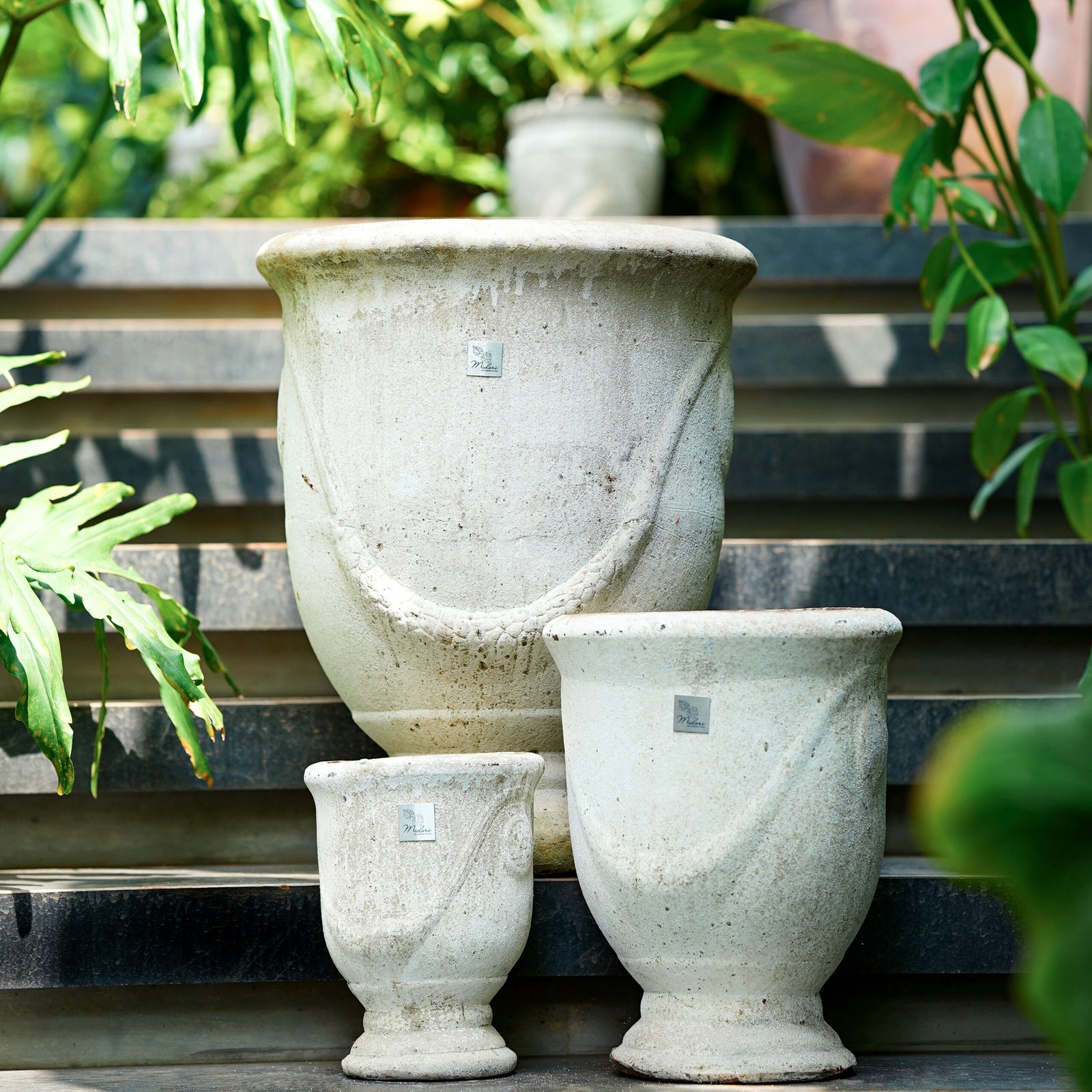
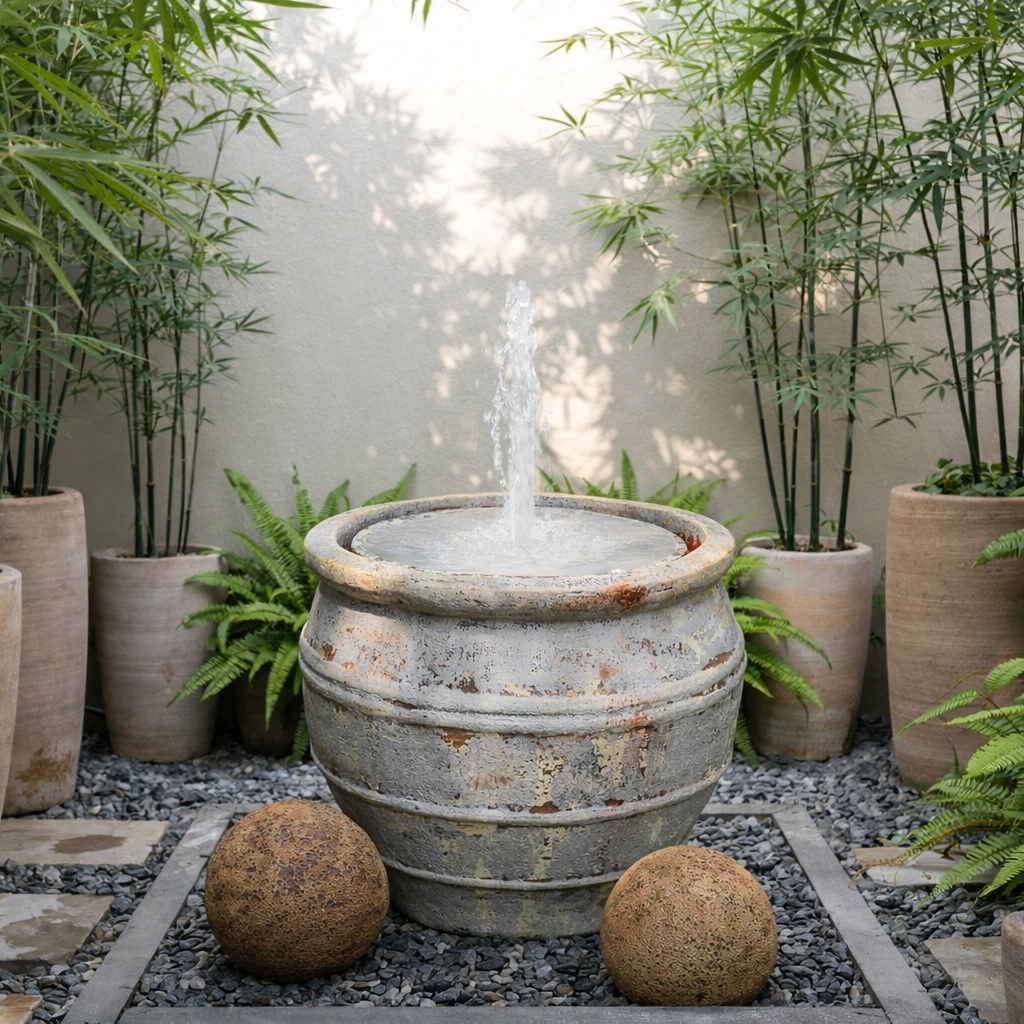
The French Anduze Planter ( the classical French garden urn form, originating in the town of Anduze in southern France in the 17th century; a form that has been in continuous use for over three hundred years) takes one of the most enduring forms in the history of garden design and renders it in aged, weathered stone-finish ceramic. The silhouette is immediately recognisable, it is a form that has stood in the gardens of European châteaux, monastery courtyards, and colonial verandahs for centuries, and it carries that history quietly in its proportions.
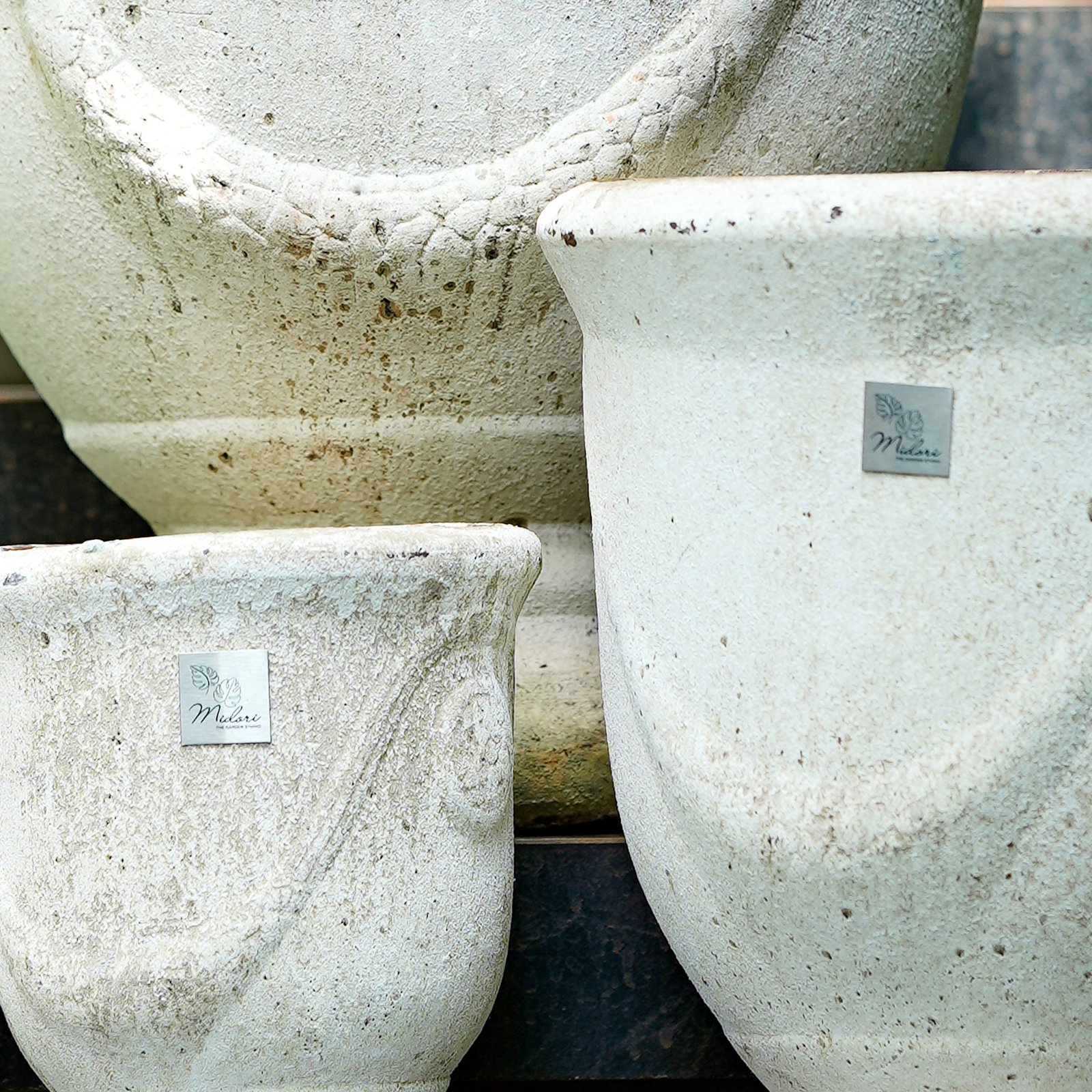
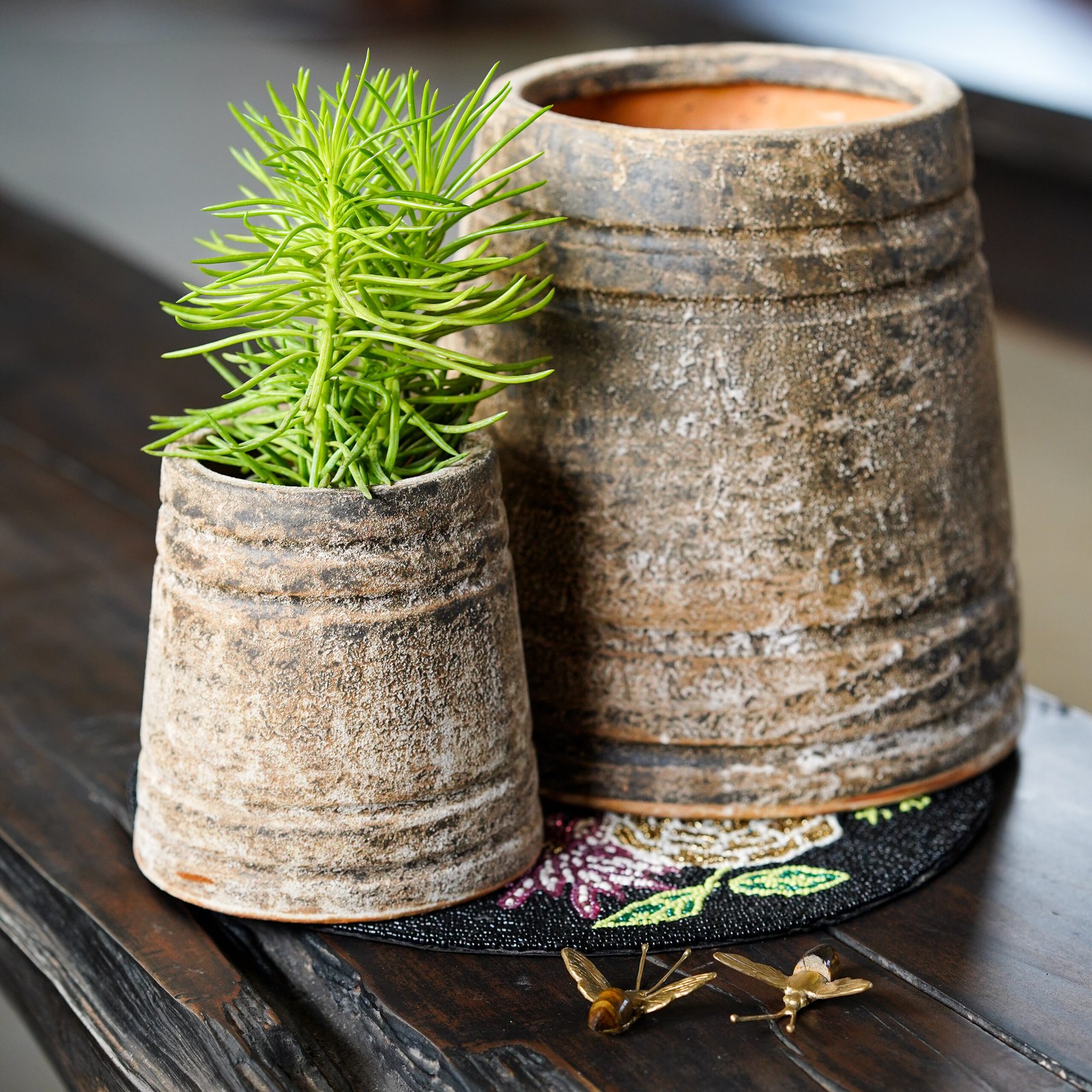
The finish here is the work. The surface is treated to resemble aged limestone or weathered render — pale, chalky, and uneven, with patches of grey, moss-green, and raw clay showing through where the finish has worn or been abraded. Mineral deposits, hairline cracks, and tonal variation are all present in the surface, not as damage but as intention. The pot looks as though it has been standing in a garden for a long time. This is not a pot that announces itself as new.
The swag detail — a raised, twisted rope of clay applied to the upper body — is the form’s defining classical element. Here it is rendered without gilding or embellishment, simply modelled in the same material as the body and aged to the same tone. In the smaller sizes, the swag is proportionally compact; in the large, it sweeps with more presence. Each size carries the Midori studio mark, applied discreetly as a small pressed medallion.
The pedestal foot lifts the body off the ground, creating a shadow line beneath the pot and giving it a formality that flat-based planters do not possess. This makes the Anduze particularly well suited to symmetrical placements — flanking an entrance, a doorway, or the top or bottom of a stair flight — as well as to solo placement as a considered focal point in a garden composition.
Available in three sizes. Suitable for outdoor and sheltered outdoor use. Comes with a drain at the base.





Reviews
There are no reviews yet.