
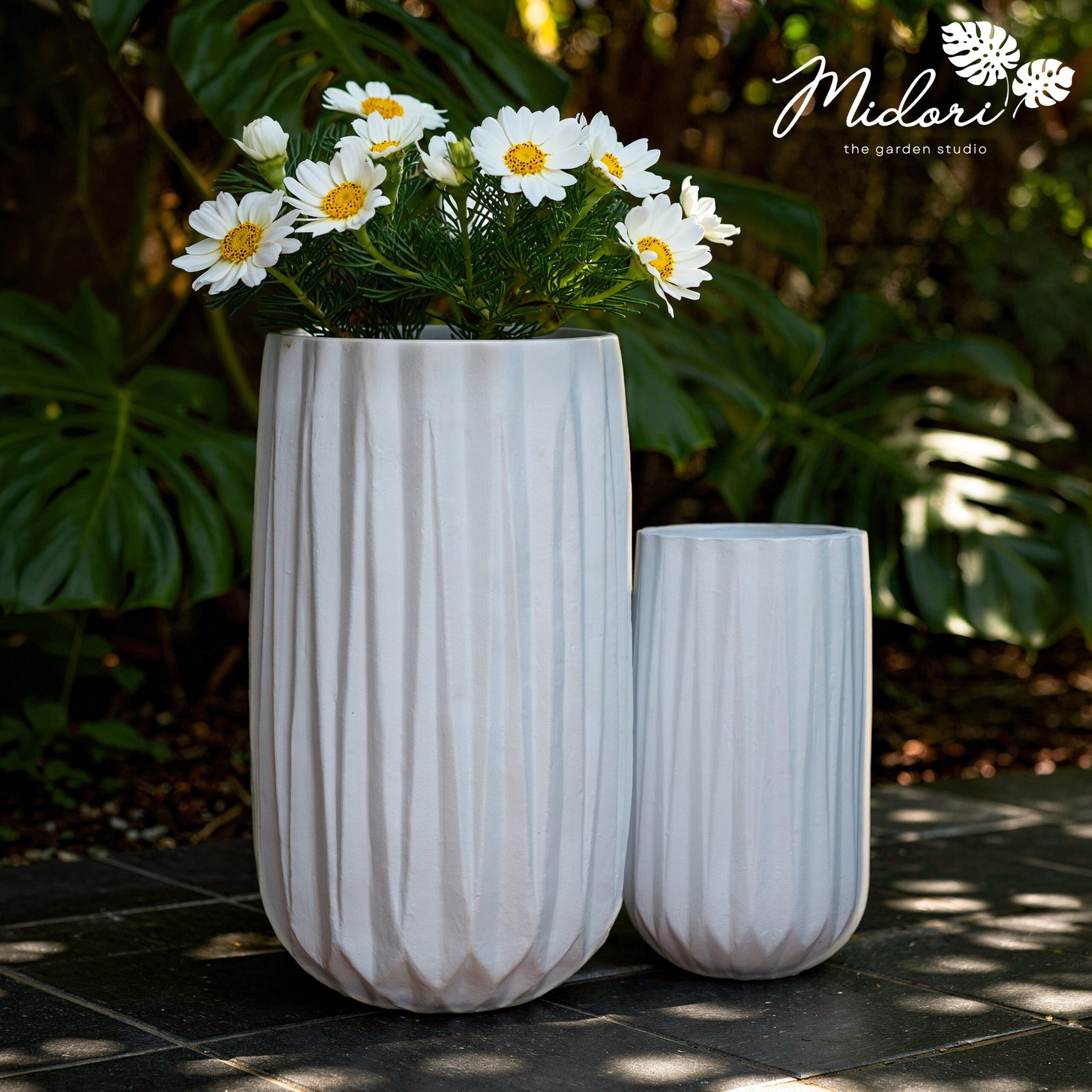
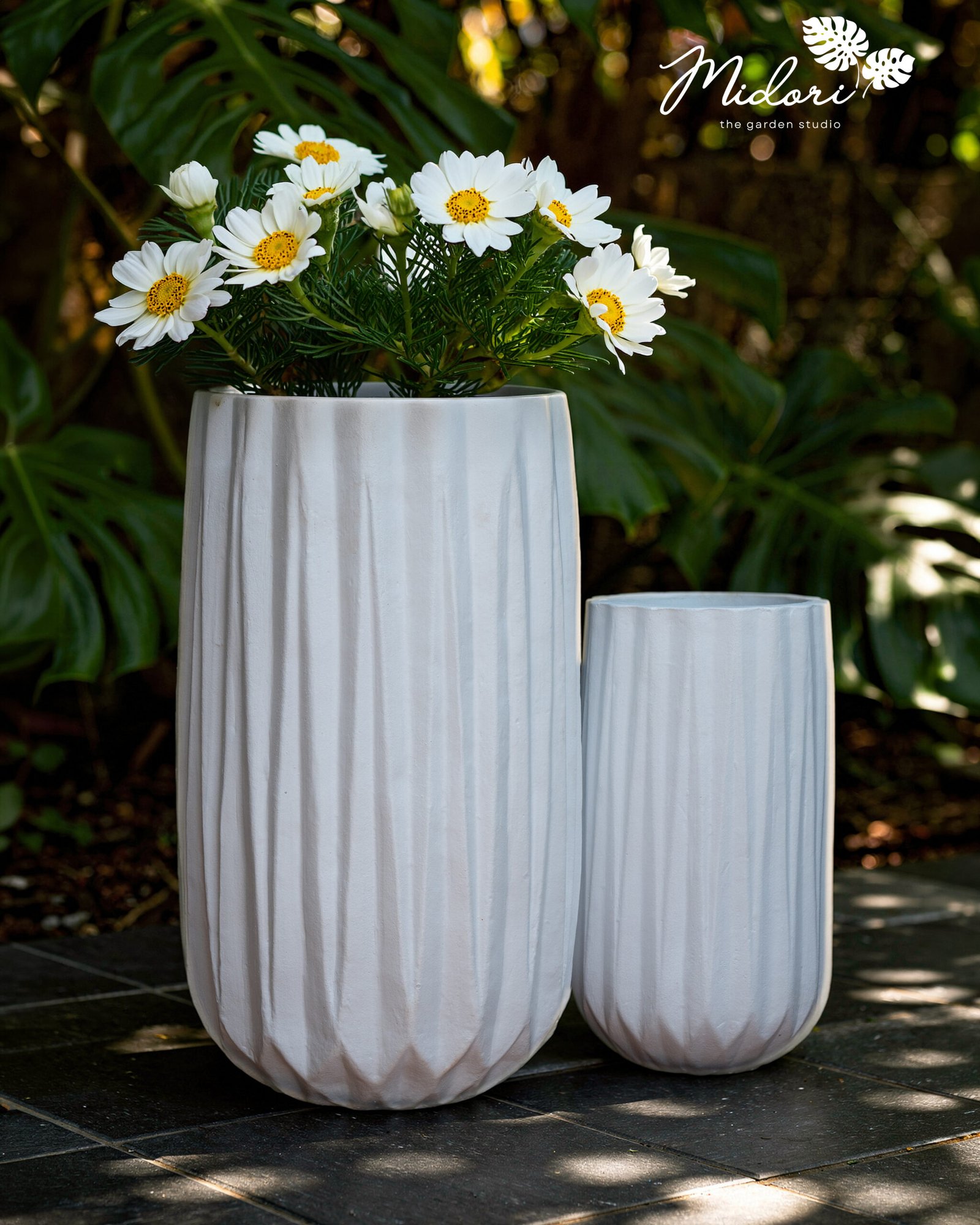
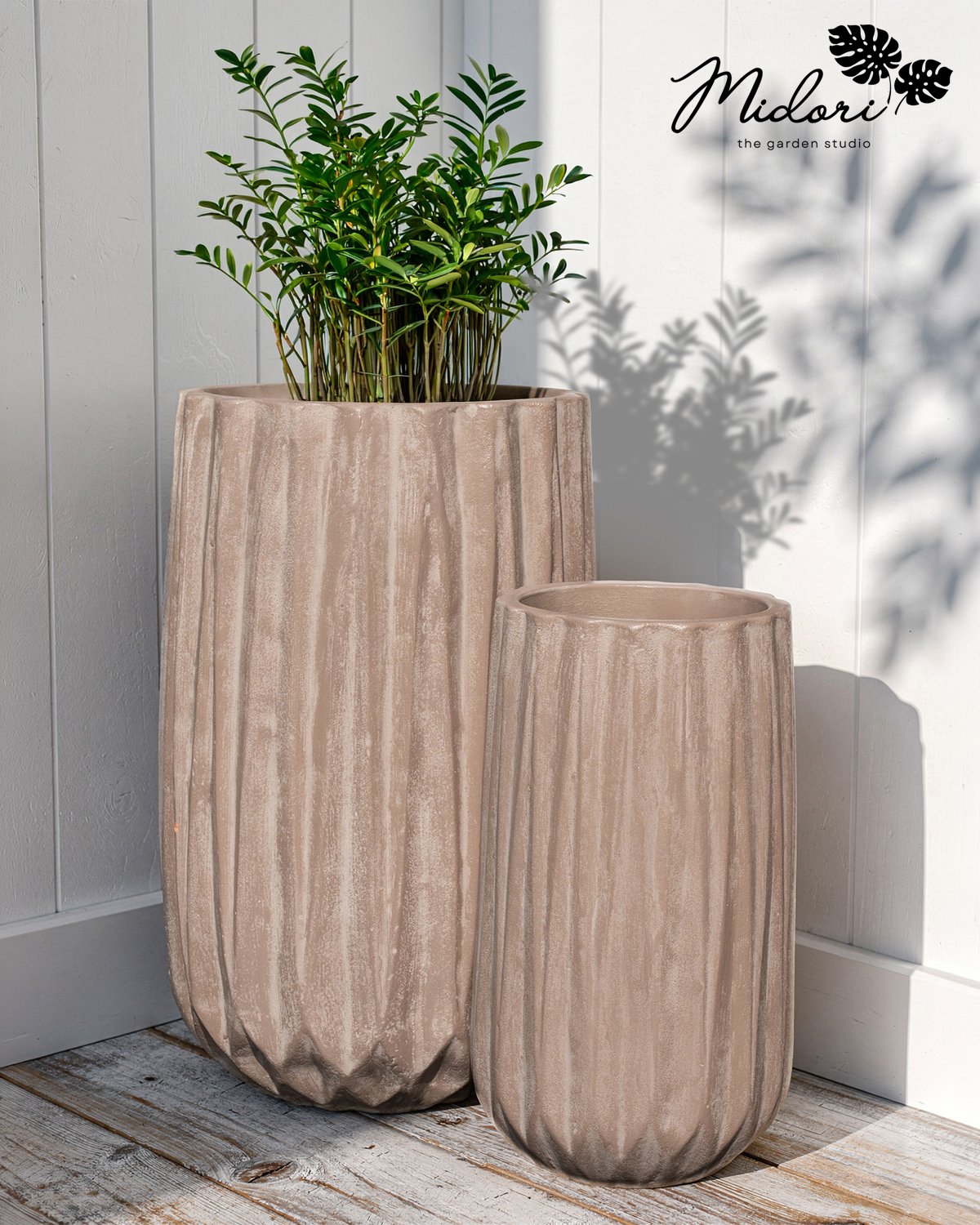
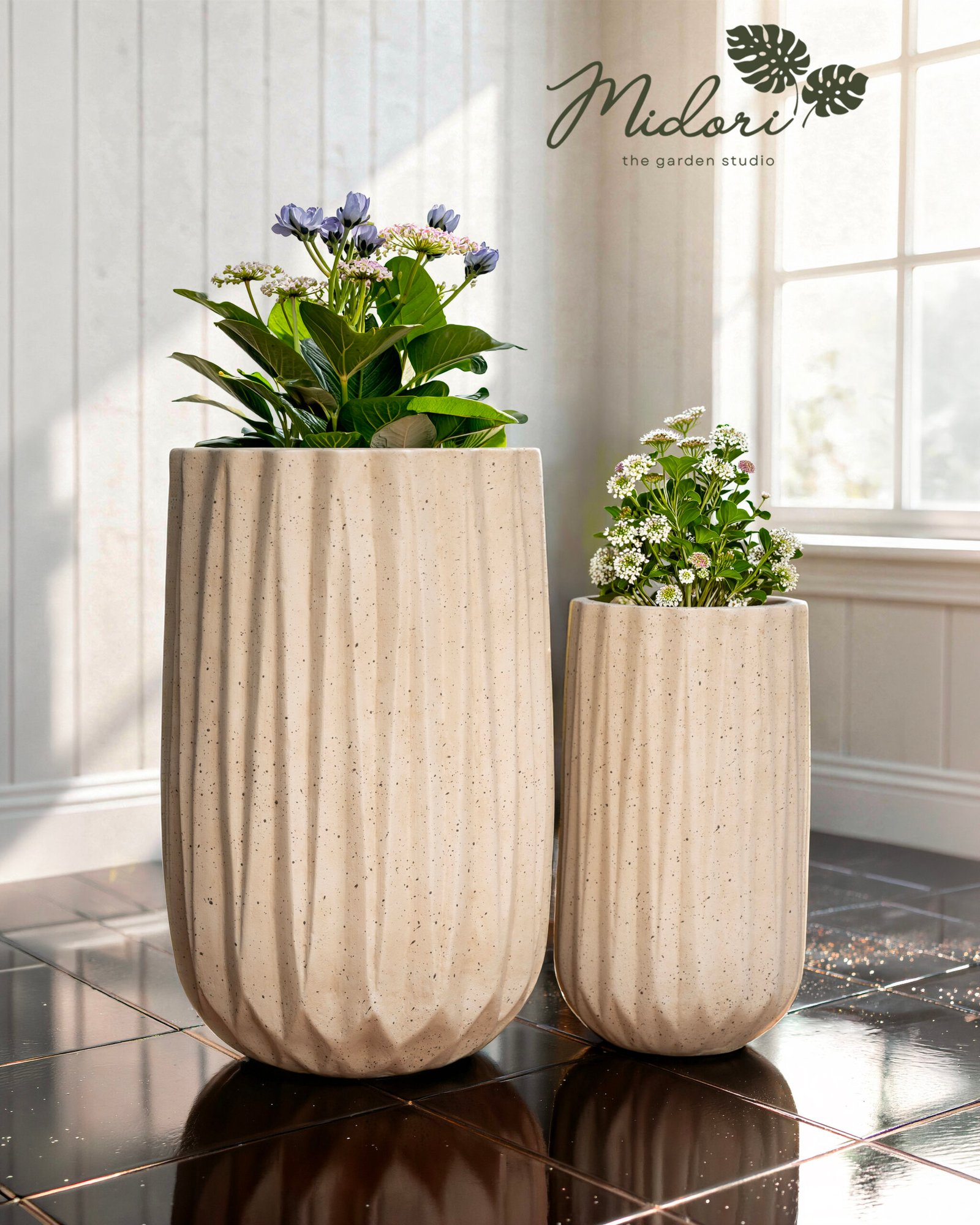
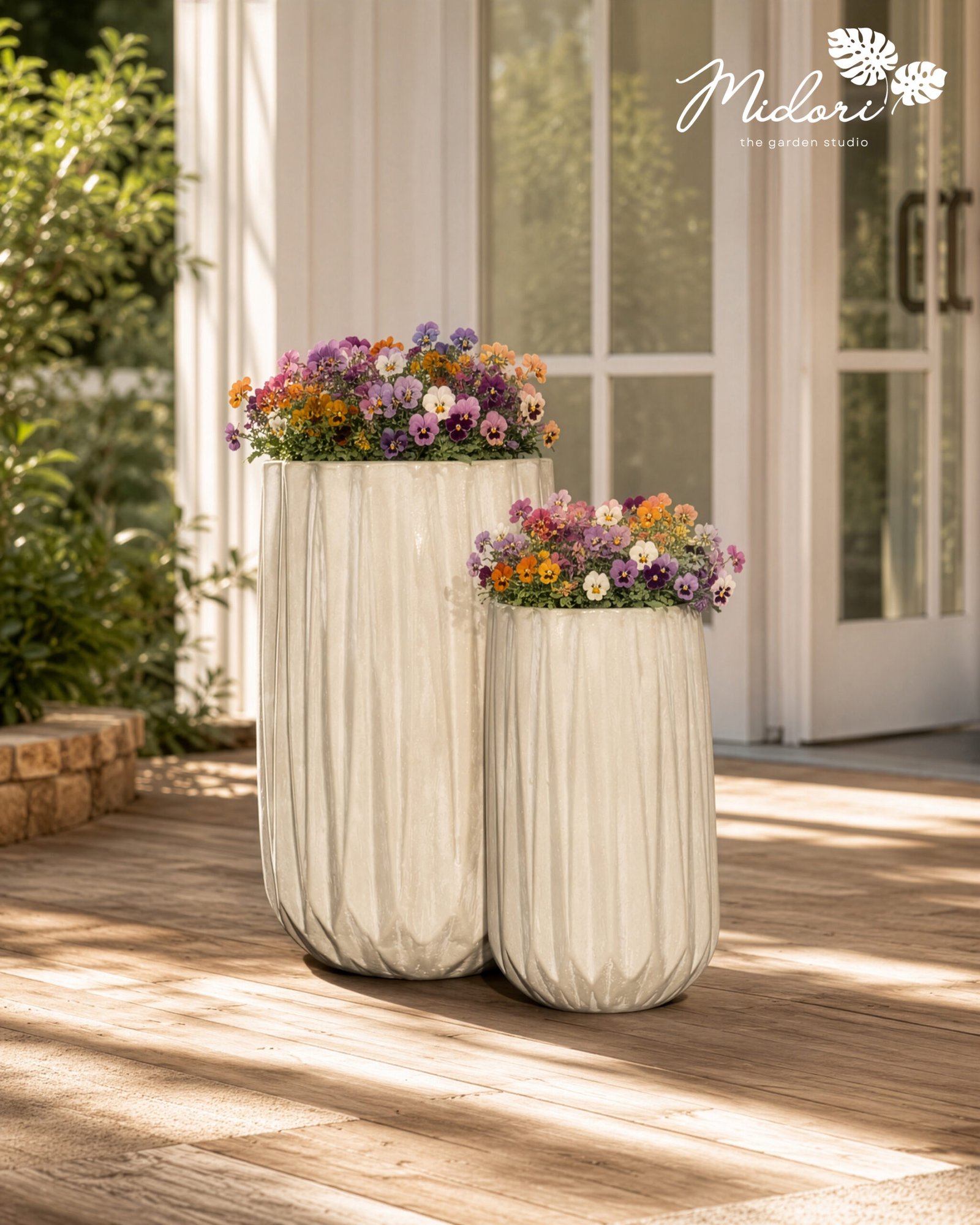
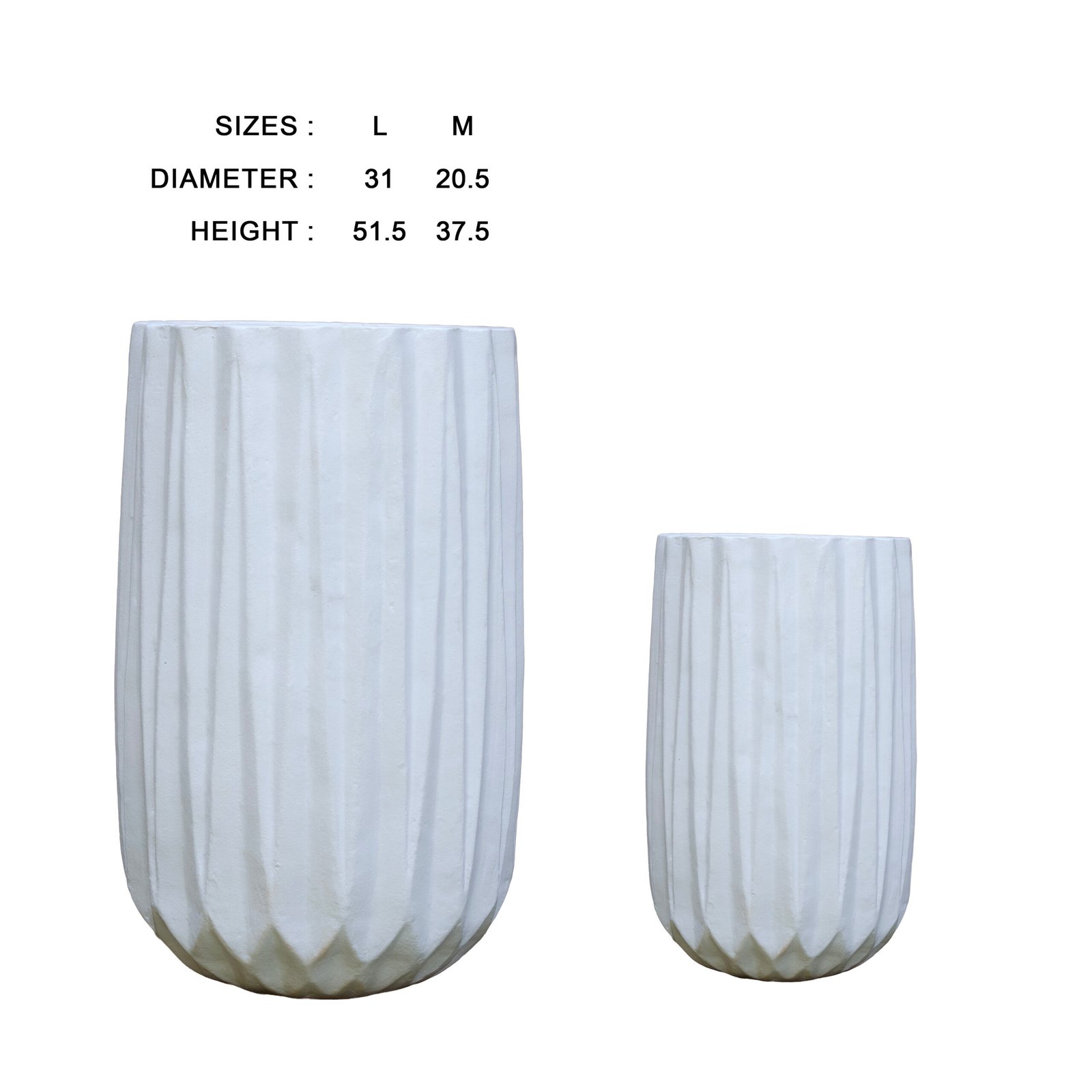
Akari terracotta planter – is the lantern in the Origami collection ; tall, standing , casting a sense of light by its very presence. Compliments the Tsuki family of Origami which stands for the moon — quiet, low, contemplative.
Drawn upward into a slender column, the Akari form takes the same origami-folded language and stretches it vertically. Sharp facets run the length of the body, narrowing toward the foot, opening softly at the rim. In painted terracotta — hand-finished and matte — the form reads almost architectural. A single Akari can anchor a doorway, a pair can frame one, a row of three can become the spine of a corridor.
The name comes from the Japanese word for light or lamp — the warm domestic light of evening. In Gifu, paper-lantern craftsmen have been folding washi over bamboo for over four hundred years. Akari belongs to that lineage in spirit if not in material: terracotta where there would be paper, mineral pigment where there would be lamplight. The form remembers the lantern; the body holds the earth.
Folded into the geometry of origami, the Tsuki family arrives in four moods, each drawn from the Japanese natural world:
- Tsuki Shiro (白) — the white of snow under moonlight, of unbrushed paper, of ceremony.
- Tsuki Sakura (桜) — the soft pink-tan of cherry blossoms past their peak, of petals carried on a warm spring wind.
- Tsuki Ishi (石) — the warm grey of weathered stone, of old garden walls and river-smoothed pebbles.
- Tsuki Suna (砂) — fine mineral speckle, like the floor of a dry riverbed or the gravel of a raked Zen garden.
Where It Belongs
Wedding aisles · boutique hotel entrances · designer storefronts · residential foyers · modern living rooms beside warm wood · poetry-quiet courtyards.
Care
Akari terracotta planter in a hand-finished, traditional material — it asks for slightly more care than glazed or composite planters, and rewards it with character that deepens over time.
- Placement: Best suited to indoor spaces or sheltered outdoor settings — covered porches, verandas, balconies under eaves, courtyards with overhead cover. Avoid prolonged direct rain and harsh midday sun, both of which may gradually fade the paint over years.
- Cleaning: Wipe gently with a soft, dry or barely damp cloth. Avoid soaking, abrasive cleaners, or pressure washing — all can dull or lift the matte paint.
- Watering: Use the drain hole or a saucer to prevent standing water. Terracotta is porous, so consistent damp against the body can stain or weaken the paint.
- Refresh: With years of outdoor use, the painted finish may soften or develop natural patina — many owners come to prefer this aged character; others choose to refresh with a coat of mineral paint.
Midori Pairings
Akari terracotta planter suits three moods: Refined, Wild & Lush, and Serene.
Refined — The Considered Interior Plant a Sansevieria Laurentii or a ZZ Plant in Akari Large. The sculptural uprightness of both the plant and the planter creates a composition that reads as intentional from across the room. Low water (every 2–3 weeks). Bright to low indirect light.
Wild & Lush — The Tropical Statement A Bird of Paradise in Akari Large beside a pool or on a covered terrace is architecture, not gardening. The pleated column grounds the tropical energy. Moderate water. Bright indirect light.
Serene — The Quiet Corner A Peace Lily or a Boston Fern in Akari Medium for a bathroom, reading nook, or bedroom corner. The terracotta breathes with the plant. Moderate water. Low to medium indirect light.
Beena’s styling note
Akari terracotta planter is not a background piece — place it where it has room to be seen. A single Large in Sakura beside a white wall reads like a brushstroke. A pair of Mediums flanking an entrance in Ishi or Suna creates quiet symmetry without formality. If you are placing Akari with other planters, let it be the tallest in the composition — it was designed to lead.


Reviews
There are no reviews yet.