
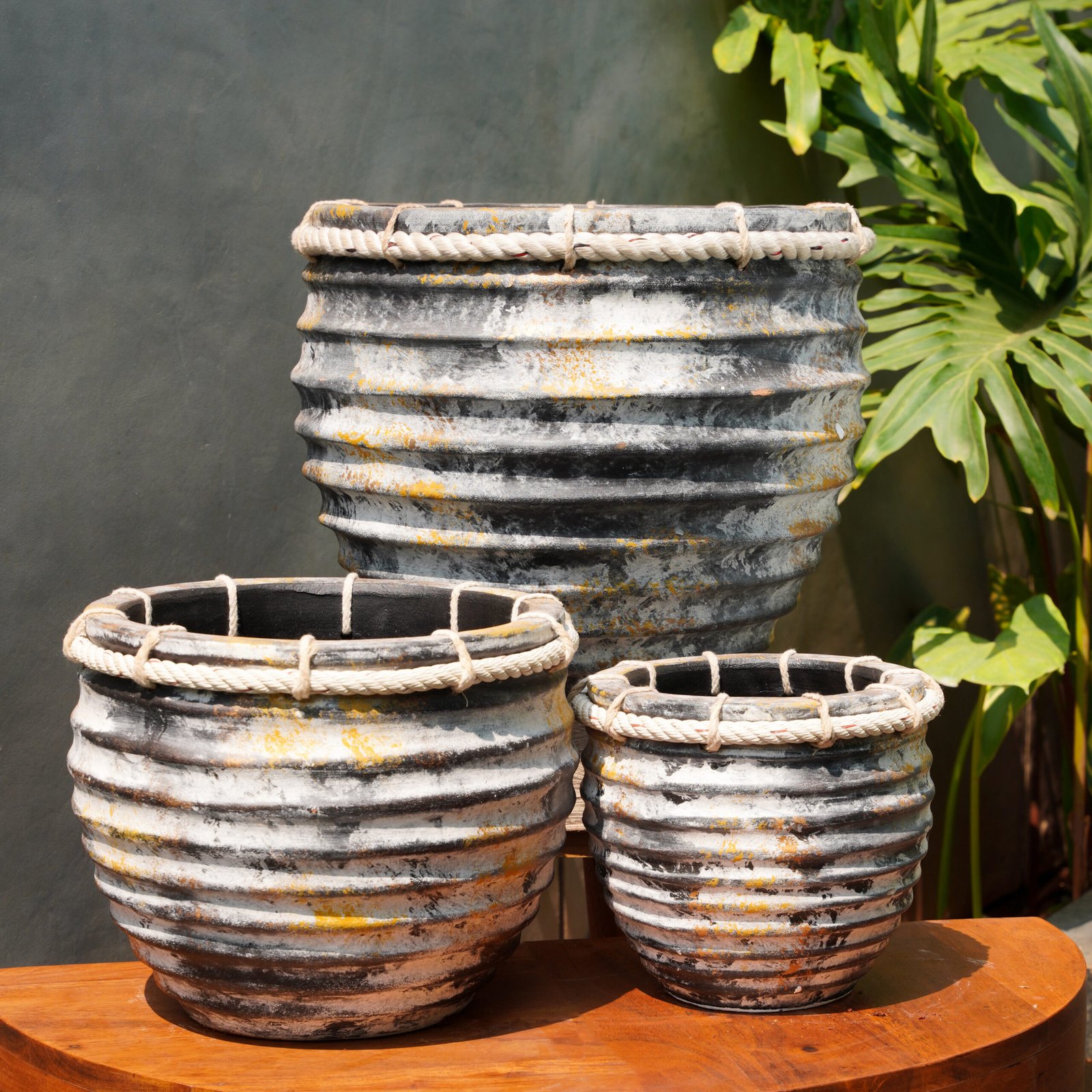
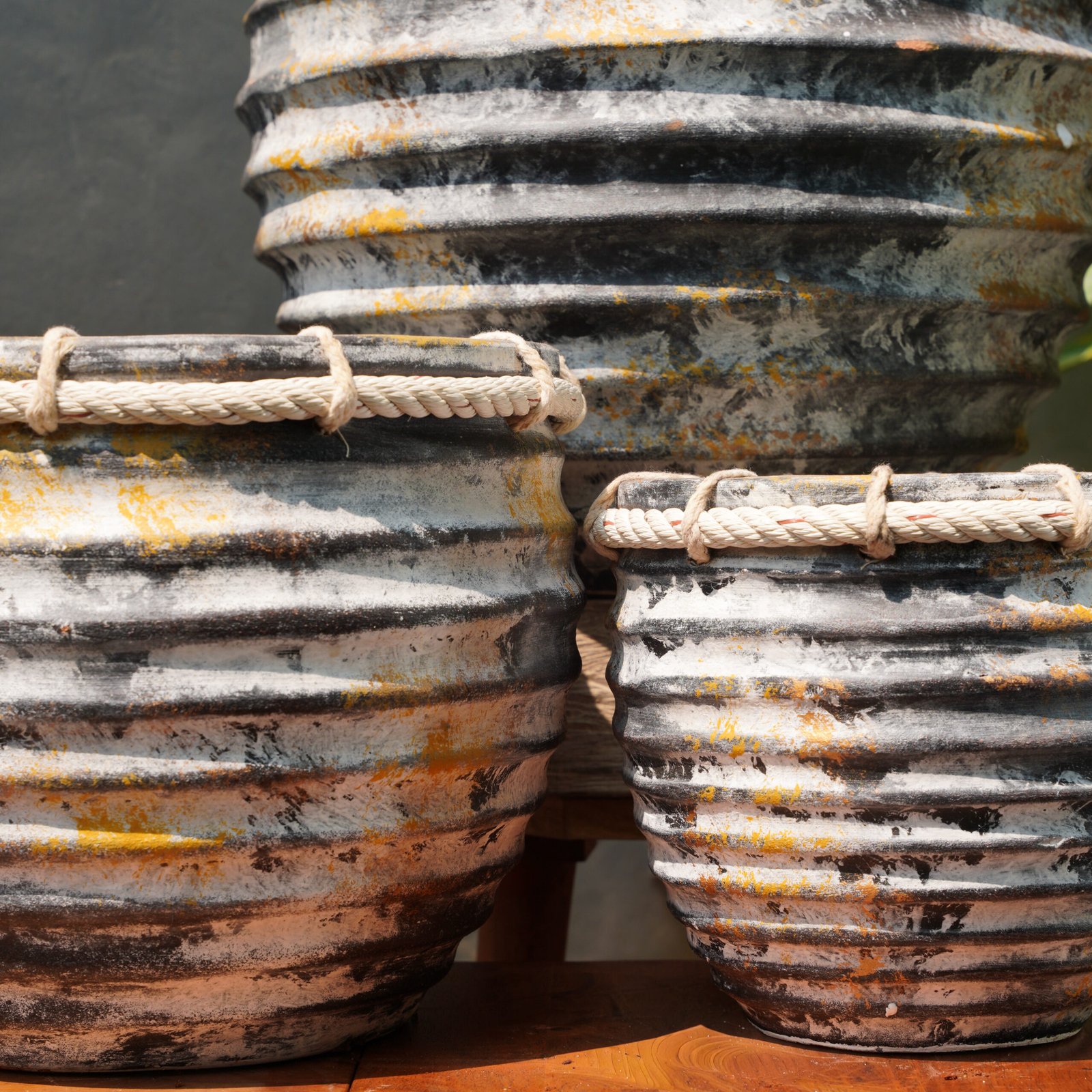
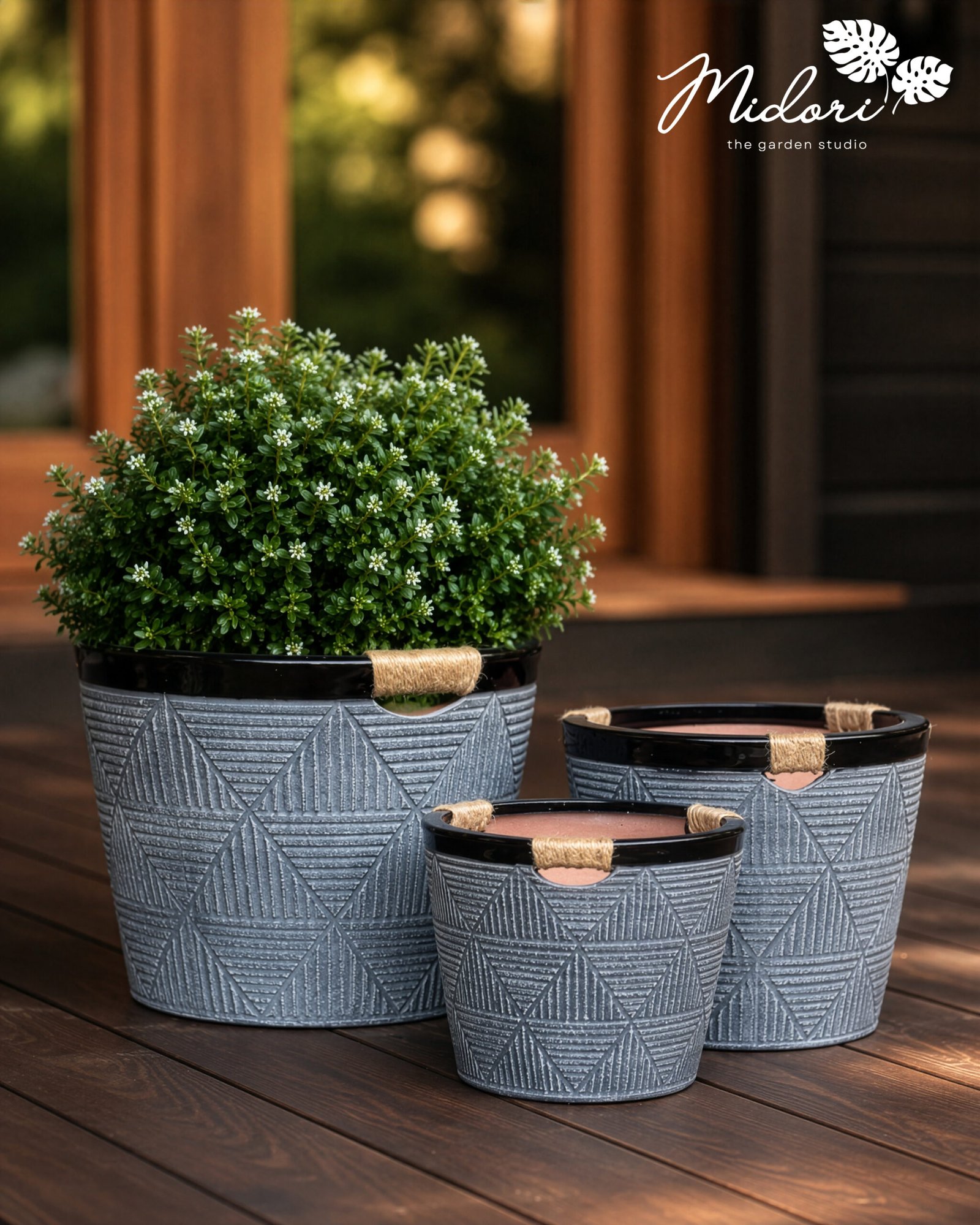
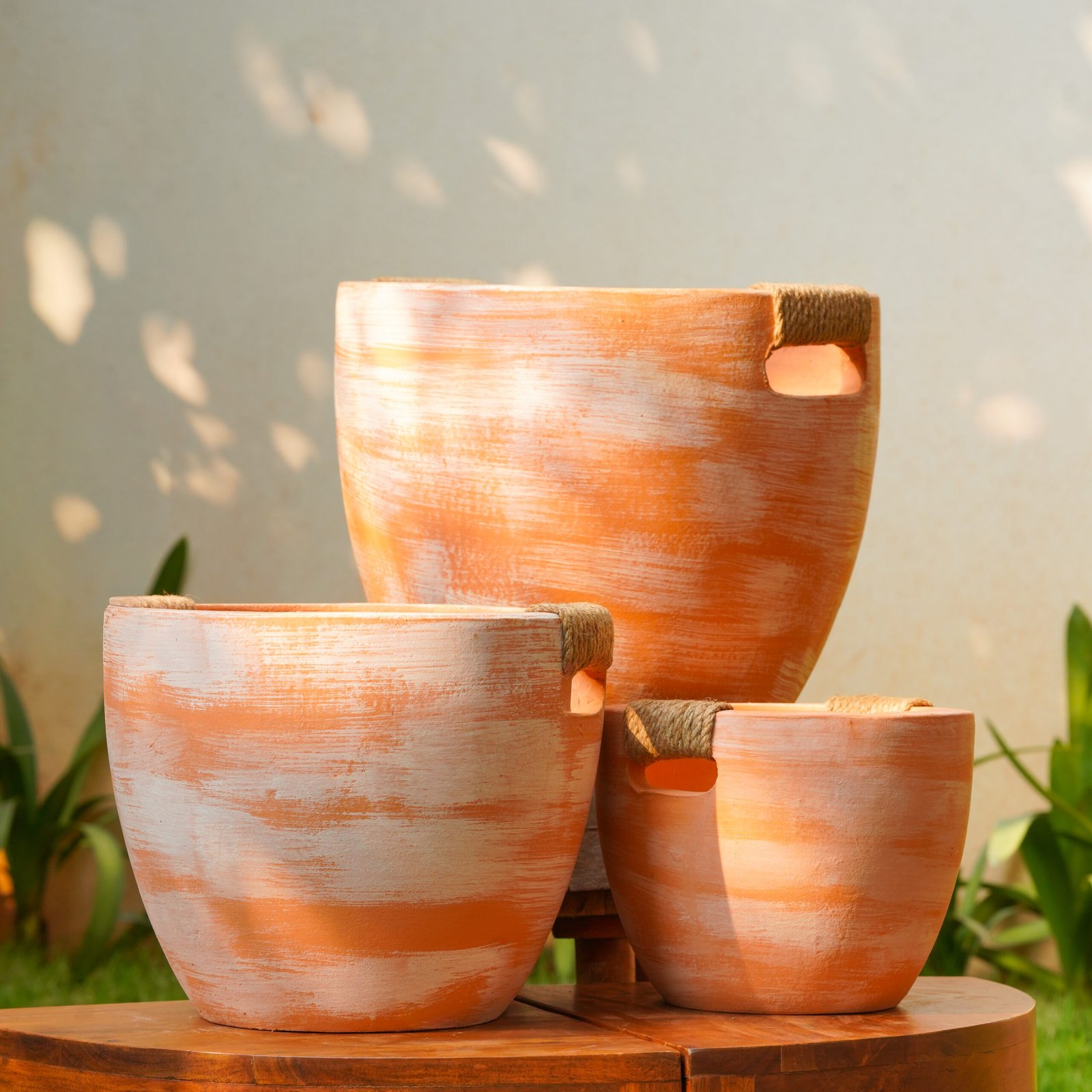
The Kaavi Rope rim terracotta planter is a coil-built terracotta pot finished with a layered, hand-applied surface that reads differently from every angle. Black, white, and ochre are worked into the ribbed clay body in successive passes — each coat applied loosely, allowed to dry unevenly, and partially abraded to reveal what sits beneath. The result is a surface that resembles aged stone, weathered plaster, or a wall that has lived through several seasons. No two pots carry the same finish.
About Kaavi rope rim terracotta planter
Kaavi rope rim terracotta planter’s coiling technique is visible in the form itself. Horizontal ridges wrap the body at regular intervals — not smoothed away, but left as a record of how the pot was made. The ridges catch the layered pigment differently to the recessed grooves between them, giving the surface its depth and its sense of accumulated time. The interior is finished in a deep matte black.
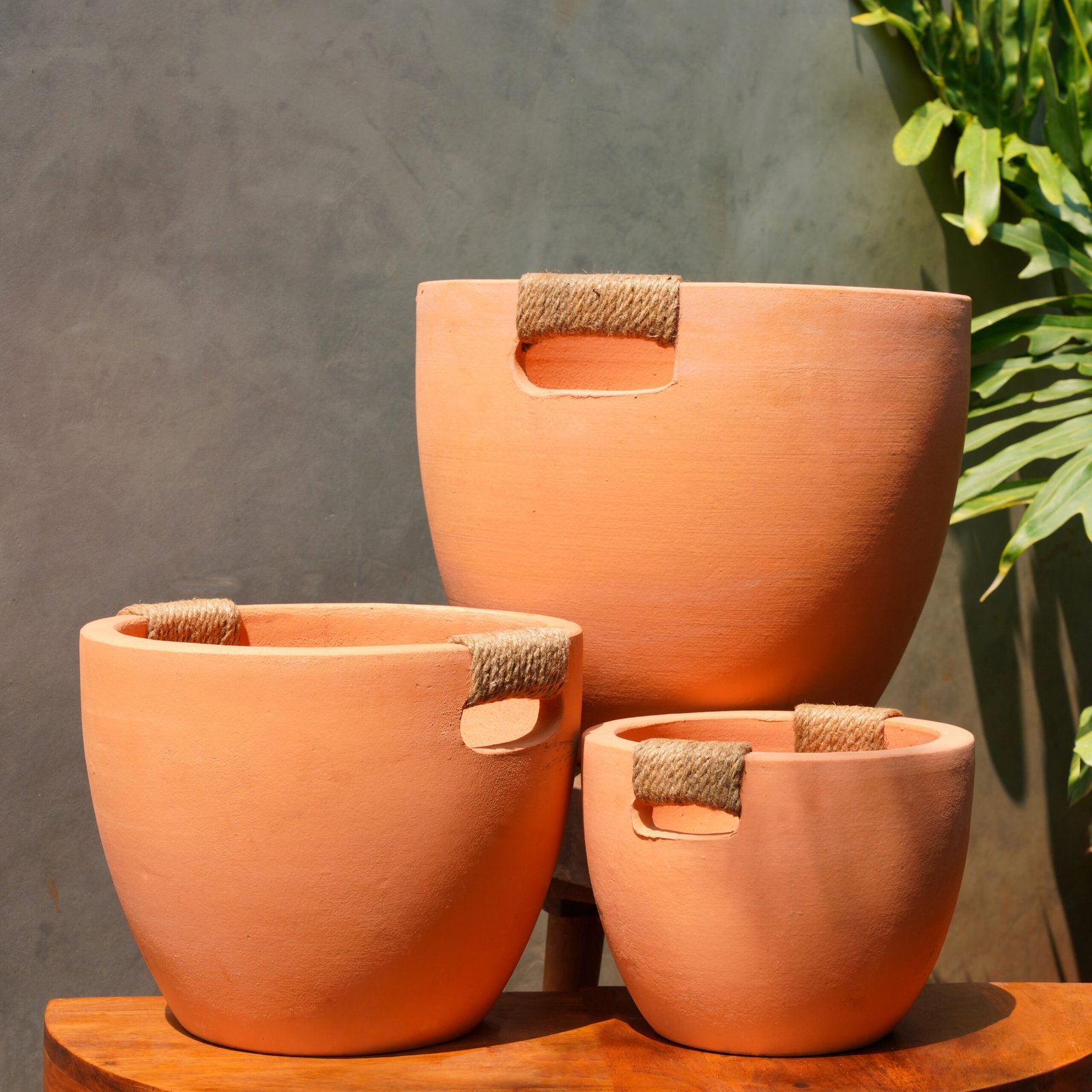
At the rim, a length of thick rope is laced through and knotted at intervals — a detail that is both structural and considered. The natural, undyed rope sits in quiet contrast to the dark, worked surface of the body: raw against aged, light against deep.
The form is wide and bowl-like, broader at the shoulder than at the base, with a generous opening that suits large-rooted specimens and statement plants. The proportions are unhurried — this is a pot meant to anchor a space rather than fill it.
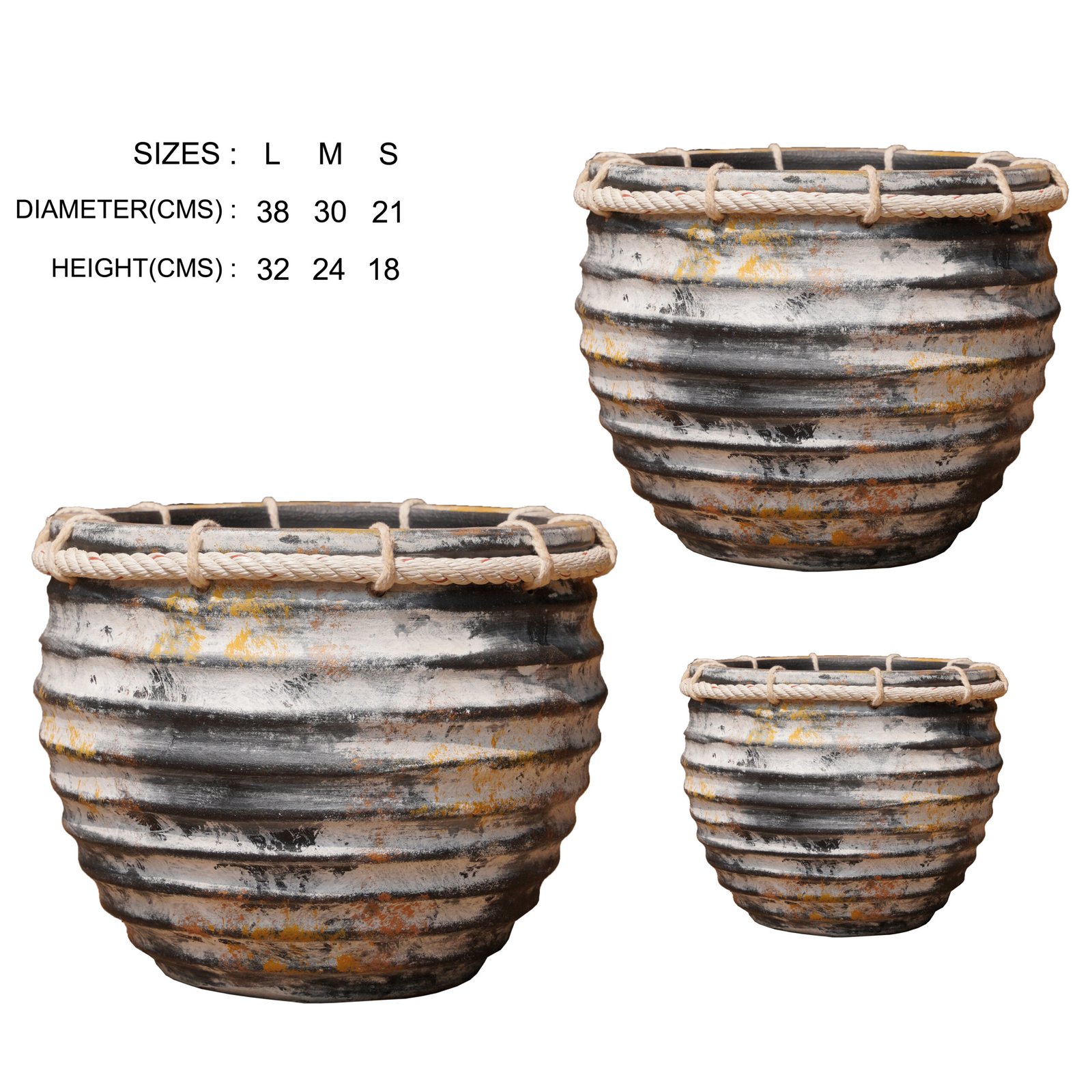
Available as a set of three nesting sizes and can be picked up individually as well and comes with a drain hole. The surface treatment is consistent across the set, though each pot’s finish is individually worked and will vary in the distribution of tone and colour.
Material — Coil-built terracotta, hand-applied lime and pigment wash, cotton rope
Finish — Layered black, white, and ochre — hand-abraded. Each piece is unique and surface variations occur.
Available as — Set of three (S / M / L) or individually
Care — Wipe gently with a dry cloth. Surface patina will deepen naturally. Avoid prolonged soaking of the rope trim. Its for indoor or covered outdoor
Best paired with
| Mood | Plants | Light & Water | Setting |
|---|---|---|---|
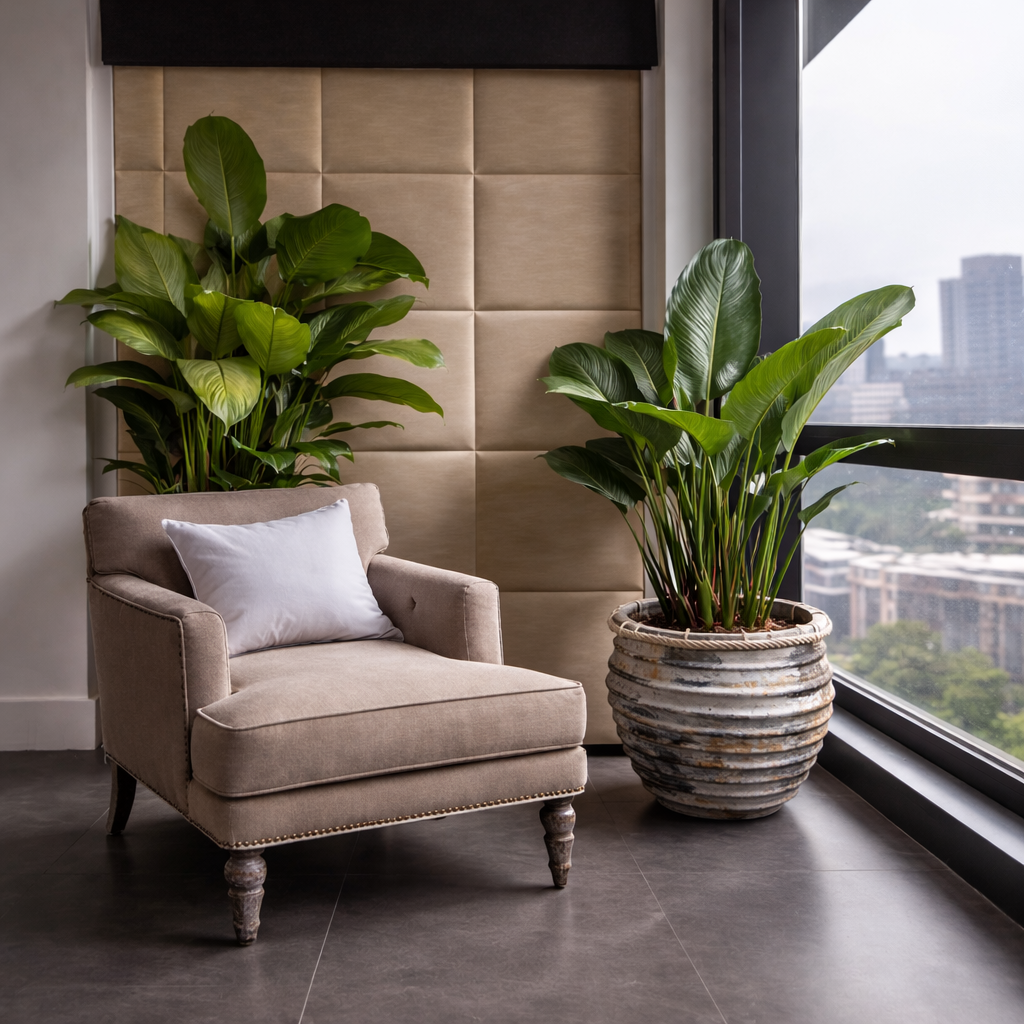
| Statement & Architectural | Bird of Paradise, Fiddle Leaf Fig, Banana plant | Bright indirect · every 7–10 days | Large size · entrance, courtyard, lobby |
| Earthy & Textural | Aloe, Agave, Jade Plant | Bright direct–indirect · every 10–14 days | Medium · terrace, raw stone or wood settings |
| Layered & Lush | Monstera, Alocasia, Philodendron | Medium–bright indirect · every 5–7 days | Medium & Small · covered patio, styled corner |
Find your pairing
| Plant | Match | Note |
|---|---|---|
| Bird of Paradise | ✓ Perfect | Large only · wide bowl form supports a substantial root system |
| Fiddle Leaf Fig | ✓ Perfect | Large · the weathered surface grounds a plant that can otherwise feel too polished |
| Monstera | ✓ Strong | Medium · broad leaf form matches the pot’s unhurried proportions |
| Agave | ✓ Strong | Medium · structural, architectural, suits the coil-built texture |
| Alocasia | ✓ Strong | Small–Medium · dark, dramatic foliage against the deep matte black interior |
| Jade Plant | ✓ Strong | Small · compact and low-maintenance, works in the smallest nesting size |
| Trailing plants (general) | △ Possible | Softens the form but can hide the rope rim detail — use deliberately |
| Delicate, fine-leaved plants | ✗ Avoid | Visual weight mismatch — Kaavi wants substance, not delicacy |
Beena’s curating tips
Kaavi rope rim terracotta planter doesn’t photograph the same way twice — turn it a quarter turn and the ridges catch the layered pigment completely differently. When styling for shoots or in-store display, always take a moment to find the angle where the finish reads best before settling on a position.
The rope rim is the detail that makes people pick this pot up rather than just look at it. Position Kaavi where someone can actually reach the rim — a console, a low table, an entrance at hand height — rather than only on the floor, where that tactile detail goes unnoticed.
Three nesting Kaavi in graduated sizes, slightly offset rather than lined up, is the strongest single-collection display in the range. The variation in each pot’s finish becomes part of the composition — no two will ever sit exactly the same way next to each other, and that’s the point, not a flaw to style around.


Reviews
There are no reviews yet.